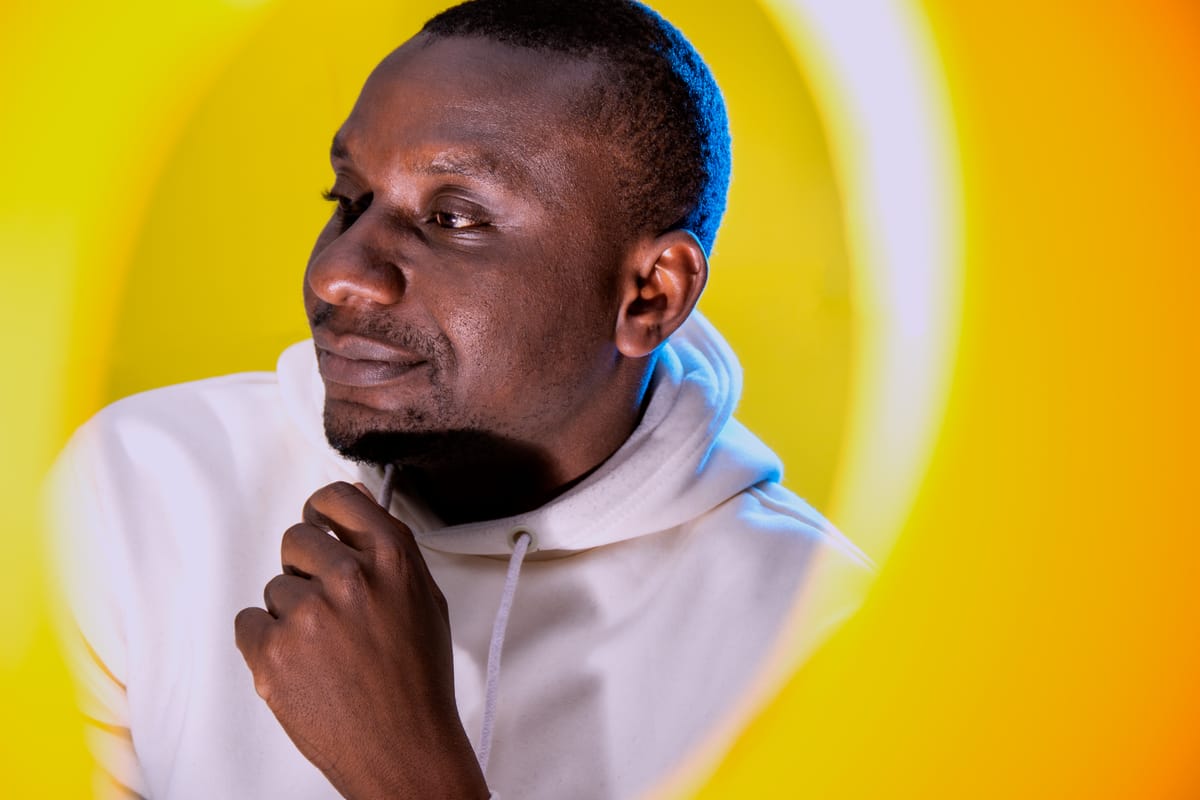

Vision Is a Form of Genius.
Welcome to African Hustle! Your bi-weekly dose of inspiration and smart insights into African entrepreneurship — featuring real stories about tech, culture, startups, founders, and innovations shaping the future of the continent.
Did You Know
Africa holds a significant position in the global bauxite market, with Guinea, Ghana, Sierra Leone, and Mozambique collectively accounting for at least one-third of the world's proven bauxite reserves.
Guinea is the foremost bauxite producer in Africa, with 7.4 million metric tons of reserves in 2021, representing 24% of global reserves.
In the same year, Guinea was the third-largest bauxite producer globally, contributing 86 million tons or 22% of the world's total production.
Sierra Leone, Ghana, and Mozambique also have notable bauxite mining operations, with significant export volumes recorded in recent years.
Bauxite is used as the main raw material for alumina making, which in turn is utilised for aluminium manufacturing.
Feature Story
Love was never taken lightly.
Maybe in the rest of the world. But not in Africa.
I remember the stories of how my brothers and uncles would take months, if not years, to declare their love to a girl.
And even then, once they got the message across, it was never a straightforward affair. Aunties had to be roped in. It became far more complicated, but beautiful at the same time.
Love took time.
Not only love. Even becoming successful was a long game.
The wondrous 21st-century creature called an overnight success was unheard of.
At least that was the case in Africa.
But this might not be so unique to the continent. Just a while ago, I was listening to Stripe co-founder John Collison speak about the early days of Stripe.
For two whole years, Stripe only managed to get 50 users. Today, it powers millions of businesses and people, and processes trillions of dollars in payments.
Speaking of trillions, this brings us to something mind-boggling that came with SpaceX’s valuation.
Elon Musk joined a one-man club, the trillionaire club, at least according to the billionaire indices.
The human mind struggles to process numbers that large. A million is already hard to imagine for some people. A billion is almost abstract. A trillion sits in another universe entirely.
And yet, when we talk about Elon Musk, many people rush past the sheer scale of what he has built.
Some hate him because of his politics.
Some dislike him because of how he speaks. Then there is his public behaviour!
He did say there was a genocide in South Africa, which was entirely false. And I was genuinely irked by that.
To others, he is not a scientist or physicist worth his salt.
They say he did not develop something as groundbreaking as the mathematical laws of gravity, as Newton did.
Nor did he come up with something as significant as E = mc², like Einstein.
And maybe that is true. But even if it is, are we not missing something here?
Not every world-changing person changes the world by being in the pedigree of Einstein or Newton. Some people change the world by seeing a future before others can see it, then convincing enough brilliant people to help build it.
Elon Musk is one of the most polarising figures in business. But beyond the politics, personality and public controversies, entrepreneurs can learn something powerful from him: the ability to build a vision so compelling that talent, capital and belief gather around it.
Vision
That may be Elon Musk’s most important lesson.
The ability to imagine a future bigger than himself. Then to articulate it confidently.
It is no small task to make other people believe in your vision strongly enough to leave their own paths and work on yours.
How many people can walk into a room full of engineers, physicists, designers and financiers, many of them more technically educated than they are, and persuade them to work on a vision that sounds impossible?
How many people can convince others to build reusable rockets?
How many can convince people that electric cars can become mainstream?
How many can build companies around payments, space, artificial intelligence, tunnelling, satellites and brain-computer interfaces?
Whether one likes Musk or not, there are business lessons here we cannot ignore.
And business is not a contest for likes. You need to be humble enough to learn even from people you disagree with, or even dislike.
Musk had a vision for electric cars that went beyond Tesla’s founders. And he had a vision for rockets that was too lofty to seem practical.
What can you learn from his ability to make impossible ideas feel investable, recruitable and buildable?
Vision is not merely having a dream.
Many people have dreams.
Vision is the disciplined ability to turn an imagined future into a shared mission.
That is the part entrepreneurs must study.
When a vision is strong enough, other people can locate themselves within it.
A strong enough vision can give employees a reason to work late.
It gives investors a reason to take a risk.
And it gives customers a reason to believe they are participating, not just transacting.
A vision can turn a company from a private ambition into a public mission.
Musk mastered this, and so can we.
SpaceX is marketed not merely as a rocket company, but as an ambitious undertaking to make humanity multiplanetary.
Tesla is framed around accelerating the world’s transition to sustainable energy. It is not simply advertised as a car company.
PayPal emerged in the broader movement to make money move digitally, instantly and globally. It was not positioned as simply another payment service.
OpenAI, in its earliest form, was not framed as just another technology lab. It focused on the future of artificial intelligence and its consequences for humanity.
The most powerful entrepreneurs build worlds of meaning around their products. We saw this powerfully with Steve Jobs, and later with Tim Cook, at Apple.
When you learn to speak beyond a product, people gravitate towards you.
Talent gathers around you, and capital moves towards you.
After vision, another lesson we can learn from Elon is positioning.
Positioning
Musk has repeatedly placed himself near the front edge of major technological shifts.
Digital payments.
Electric vehicles.
Private space exploration.
Artificial intelligence.
Satellite internet.
Brain-machine interfaces.
This does not happen by accident.
It is not enough to be intelligent and talented. Many intelligent people take their brilliance to the grave. Neither is it enough to be hardworking. Many hardworking people have little to show for all their toil.
Are you positioning yourself close to the people, industries and forces that will shape the next decade?
How did Musk repeatedly position himself inside industries before they became mainstream?
As you learn, remember to take it slow. Anything worthwhile takes time.
Love, wealth, and even learning are not overnight phenomena.
Quote Of The Week
Good things take time, Better things take a little longer.
Opportunity Alert
The Global Citizen and PayPal Small Business Impact Awards
The Global Citizen and PayPal Small Business Impact Awards were established to support business owners and founders who are driving real impact in their communities by demonstrating a deep commitment to equity and sustainability in their business practices.
They are open to creative small and medium-sized business owners who have developed innovative products and services to make a positive social or environmental impact.
The awards platform will grant these groundbreaking small- and medium-sized businesses a 20K cash prize and connect them to data and insights, technical training, and marketing/brand activations to accelerate their work and impact.
Hustle Trivia
At age 12, while living in Pretoria, South Africa, Elon Musk developed and coded a video game called Blastar, which he sold to the South African computer magazine PC and Office Technology for $500. The space-themed arcade game required players to destroy alien ships.
ShoutOut
Meet Ameer Naran

This week’s #shoutout goes to Ameerh Naran, a Zimbabwe-born entrepreneur who has built his name in the rarefied world of private aviation and luxury mobility.
Ameerh is the CEO of Vimana Private Jets, a private jet brokerage with access to more than 5,000 aircraft worldwide, serving ultra-high-net-worth individuals, politicians, heads of state, royals and corporations. He entered aviation at 23 with no industry experience.
Ameerh has since extended that ambition beyond the skies. Through Naran Automotive, he is pursuing a childhood dream of building a performance vehicle brand - Naran.

The Naran – Naran Automotive’s front-mid engine 1,048bhp, four-seat, GT3-inspired hypercoupe.
His story is a reminder that African entrepreneurship does not belong only in the familiar spaces of retail, farming, tech or trade.
It also belongs in aviation, luxury mobility, design, global logistics and high-trust service industries.
Proverb of the Week
Aliyetangulia katangulia; afuataye akazane (Swahili)
The one who is ahead is ahead; the one who follows must make an effort.
Enjoyed this post? Share it with someone who might find it helpful and encourage them to subscribe!
If we missed something, we’d love to hear from you — hit reply and let us know what insights you want us to dive into next.
And if this email was forwarded to you, you can sign up here!
