

Welcome to African Hustle! Your bi-weekly dose of inspiration and smart insights into African entrepreneurship — featuring real stories about tech, culture, startups, founders, and innovations shaping the future of the continent.
Did You Know
Africa produces hides and skins. But when it comes to the shoes, bags and belts, too much of the money still goes elsewhere.
COMESA says the region has an annual demand for about 544 million pairs of footwear, yet still imports roughly $1.1 billion worth of footwear every year.
At the same time, the bloc produces about 42 million hides and skins annually, equal to 34.3% of Africa’s total production.
That means the raw material is here, but the value addition is still too weak.
The global leather market is worth about $400 billion, while the broader Middle East and Africa leather goods market was valued at $37.5 billion in 2025 and is projected to reach $47.6 billion by 2031.
In Kenya, the leather value chain contributes an estimated 1.5% to GDP, roughly 4% of the agricultural GDP. The country relies on its vast livestock population to produce about 3 million hides and 18 million skins annually
Yet a significant share of that raw material is still not tanned into higher-value leather and is instead wasted or exported for low-value uses such as food and gelatin production.
What Africa is missing is more tanning, design, branding and manufacturing capacity.
That opens room for businesses making school shoes, safety boots, handbags, belts, wallets and uniforms for a market that is already buying hundreds of millions of pairs a year.
Feature Story
Responsiveness Is Reputation
When I started working on my mentorship publication, Ask A Mentor, I emailed and messaged a number of influential business leaders.
I was hopeful, but honestly, I expected silence.
My idea was still young.
I was a little-known storyteller with a rough value proposition, asking busy people to lend their names, thoughts and time to a publication that was yet to see its big break.
Three of the people I reached out to were Cheslyn Jacobs, the CEO of TymeBank, Kensi Nobanda, Nedbank’s Group Executive for Group Marketing and Corporate Affairs, and Lamar Tyler, the CEO and co-founder of American-based Traffic Sales & Profit.
TymeBank had already reached unicorn status after a $250 million raise that valued Tyme Group at about $1.5 billion; Nedbank is one of South Africa’s major banking groups; and Tyler leads the largest business community serving tens of thousands of African-American entrepreneurs.
These were not people sitting around waiting for random emails.
But they all responded.
Not because every successful person must answer every message. That would be unrealistic.
What struck me was the discipline of acknowledgement.
These were people with status, access and heavy calendars. They had every excuse to ignore a little-known stranger.
Instead, they treated communication as part of leadership.
As I was reflecting on this, I noticed that I have never had much trouble cold emailing accomplished people. Even billionaires like Mark Cuban.
The more surprising challenge has been reaching fellow entrepreneurs.
Many entrepreneurs have developed the art of not responding.
Some even wear it as a mark of importance.
“I do not answer calls from new numbers.”
“I do not answer landlines.”
“I am bad with messages.”
“Speak to someone in my team.”
Business does not reward self-importance and silence. It punishes it.
Every unanswered call is someone choosing your competitor.
Harvard Business Review’s The Short Life of Online Sales Leads found that many companies were painfully slow at responding to potential customers.
In one audit of 2,241 U.S. companies, 23% never responded to a web-generated lead at all. The average response time among companies that did respond within 30 days was 42 hours.
In a separate study involving 1.25 million sales leads, firms that contacted potential customers within one hour were nearly seven times more likely to qualify the lead than those that waited even one more hour, and more than 60 times more likely than companies that waited 24 hours or longer.
That is the cost of delay. It is not only bad manners. It is lost revenue.
Customers do not experience your business through your branding efforts. They experience it through friction.
How long did you take to reply?
Did you answer the phone?
Did the person on WhatsApp know what they were talking about?
Did you make the customer repeat themselves?
Did you close the loop?
PwC’s customer experience research puts speed, convenience, consistency, friendliness and human touch at the centre of a good customer experience.
The same report found that one in three consumers would walk away from a brand they love after one bad experience, and that speed, convenience, helpful employees and friendly service each rank above 70% in importance to consumers.
That is why responsiveness is a core business strategy.
Richard Branson has written that communication is the most important skill an entrepreneur can possess. He says that communication is not only speaking or reading; it is understanding what is being said and, sometimes, what is not being said.
People rarely say everything directly.
A missed call may be urgency. A vague inquiry may be confusion. A short email may be someone testing whether you are serious. A complaint may be a customer giving you one more chance before leaving.
Peter Drucker’s teaching states that the purpose of business is to create and keep a customer. You cannot create or keep customers if you are too important to answer them.
Jeff Bezos made a similar point in Amazon’s 2016 shareholder letter when writing about AWS. He said it was critical to ask customers what they want, listen carefully, and develop a plan to deliver it thoughtfully and quickly.
Learn to be responsive. This does not mean being available to everyone at midnight.
It means respecting the fact that interest has a shelf life.
Someone who contacts you today is warm today. Tomorrow, they are comparing options. Next week, they may not be interested in what you have to offer or say.
Some entrepreneurs confuse being hard to reach with being valuable.
The market reads it differently.
Silence says the customer will have to chase you.
Silence says your business may be painful to deal with after payment.
Reputation is built in small moments.
Warren Buffett is often quoted as saying that it takes 20 years to build a reputation and five minutes to ruin it.
For a small business, those five minutes can be the five minutes in which a serious buyer calls, and nobody answers.
Responsiveness also teaches you.
Bill Gates has said that unhappy customers are a major source of learning. But you only learn from customers when you are close enough to hear them.
If every complaint is treated as noise, every inquiry as a disturbance, and every call as an inconvenience, the business slowly becomes blind.
Every founder must design a culture where inquiries are respected.
Entrepreneurs need simple communication standards.
Acknowledge every serious inquiry.
Return missed calls within a set window.
Use autoresponders honestly, not as digital hiding places.
Tell people when they can expect a reply.
Close the loop even when the answer is no.
Train your team to treat the first message as the beginning of trust, not an interruption.
The lesson I took from Cheslyn Jacobs, Kensi Nobanda and Lamar Tyler was that serious people do not treat communication casually.
They understand that a reply is more than a reply. It is a signal that says, I saw you, I heard you, and I appreciate your effort.
Opportunity rarely arrives perfectly packaged.
Sometimes it comes as an unknown number.
Sometimes it comes as an awkward email.
Sometimes it comes as a stranger with a half-formed idea and no obvious value to offer yet.
The entrepreneurs who respond are not always the ones with the most time. Often, they are the ones who understand the oldest rule of business: people do business with people who make them feel attended to.
Responsiveness is reputation. And reputation is still one of the cheapest competitive advantages an entrepreneur can build.
Quote Of The Week
All businesses need to be young forever. If your customer base ages with you, you're Woolworth's.
Opportunity Alert
The KPMG Private Enterprise Global Tech Innovator Competition
Applications are now open for the 2026 KPMG Private Enterprise Tech Innovator Competition.
Now in its fifth year, the competition seeks to bring together the brightest minds in technology innovations.
If you’re ready to demonstrate how your technology can make a difference in the world, this could be your moment – to challenge the status quo, introduce tech solutions through your own unique lens and open up a window to the future.
Read more about the KPMG Private Enterprise Global Tech Innovator Competition and apply here!
Hustle Trivia
In South Africa, the retail and consumer sector out-earns the rest, with the Shoprite Group, which owns Shoprite, Checkers, and the Sixty60 delivery service, bringing in approximately R257 billion in recent annual revenues to lead all private companies in the country.
We are testing a GPT to help you explore Africa every day. Try it out!
ShoutOut
Spotlight: Black Coffee
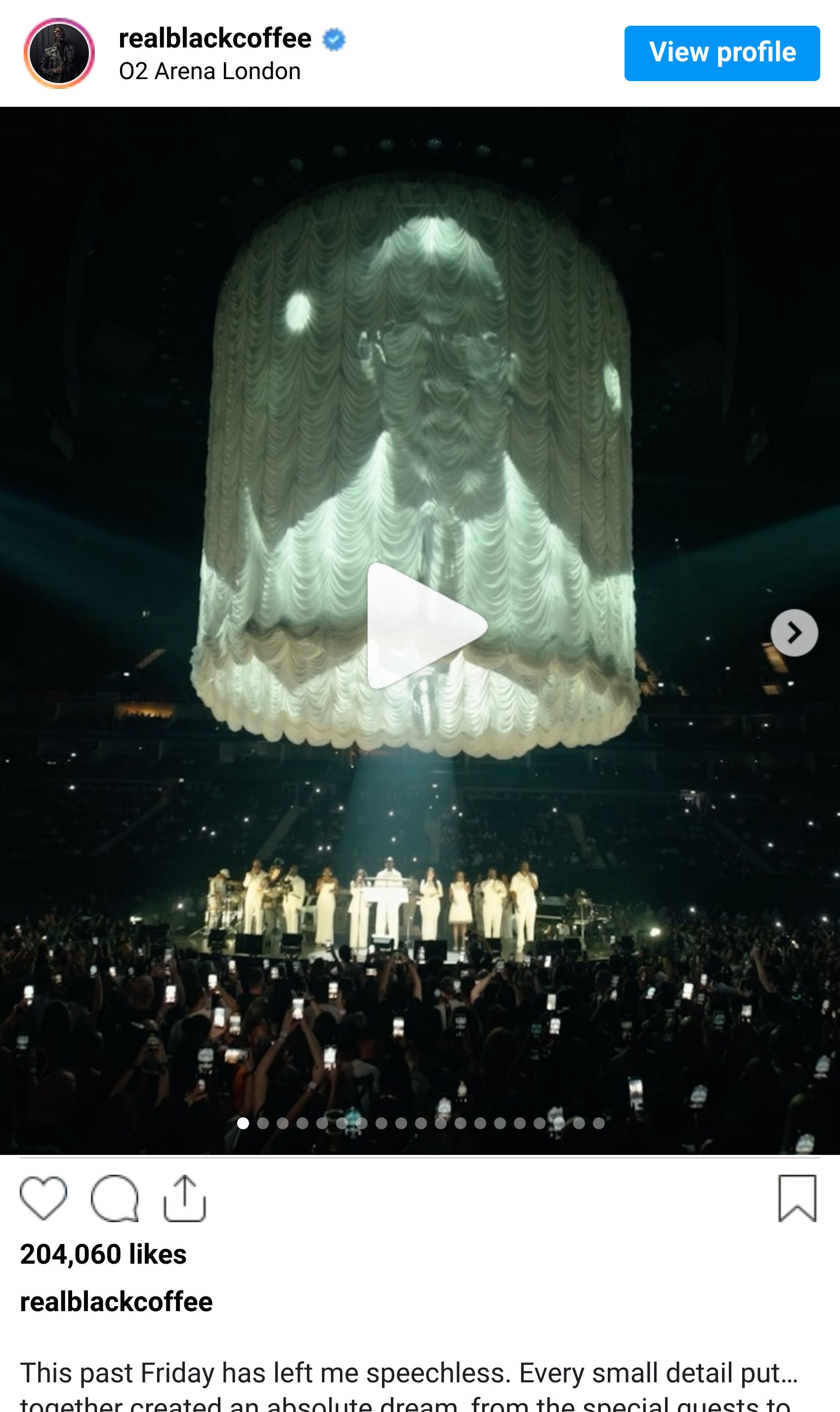
Nkosinathi Innocent Maphumulo, known globally as Black Coffee, is one of Africa’s most successful creative exports.
Born in South Africa, he built his name through house music rooted in African rhythm and emotion.
As a teenager, an accident affected the use of his left arm, but he refused to let that define his future. He adapted, kept working and turned his limitations into part of his story.
Black Coffee took a distinctly South African sound to international stages and made it premium. From local clubs to Ibiza, New York and major festivals, he proved that African creativity can compete anywhere without losing its identity.
His 2021 album, Subconsciously, won the Grammy Award for Best Dance/Electronic Music Album, placing him among the world’s leading electronic artists.
He has also worked with global names such as Drake, Usher, David Guetta and Pharrell Williams.
Black Coffee shows African entrepreneurs and creatives that success comes from mastering your craft, owning your story and staying consistent long enough for the world to notice.
Your African identity is not a limitation. It can be your strongest advantage when matched with excellence, discipline and vision.
Proverb of the Week
Angafa doofe / qotisuun karra dhaala.
Translation: When the firstborn becomes foolish, the lastborn inherits the cattle.
Meaning: Leadership and heritage must be earned through good character and capability rather than just entitlement.
Enjoyed this post? Share it with someone who might find it helpful and encourage them to subscribe!
If we missed something, we’d love to hear from you — hit reply and let us know what insights you want us to dive into next.
And if this email was forwarded to you, you can sign up here!
